Inquiry
Form loading...
Choosing a Kid Electric Scooter is about more than color, speed, or a low price. The right model should match a child’s age, size, confidence, and riding environment. This 2026 buying guide explains how to compare those factors without treating one scooter as suitable for every family. Small details matter.
We’ll look at practical features such as brake response, tire grip, deck space, handlebar height, battery range, and charging time. A manufacturer’s age and weight guidance deserves attention, too; advertised performance may differ with rider weight, hills, temperature, and surface conditions. Smooth pavement is not the same as a cracked sidewalk. That matters.
The guide also covers protective gear, adult supervision, and safe places to ride. These are not extras to consider after choosing a scooter. They shape which features are useful in the first place. For example, a manageable speed and easy-to-reach brake may matter more to a beginner than a longer claimed range. Check the manual and product specifications before buying, and confirm that the scooter fits the child in person when possible.
No checklist can predict every child’s comfort level. I’d treat ratings and range claims as starting points, not promises. A little doubt is sensible. Use this guide to compare options clearly, spot trade-offs, and choose a scooter that feels controllable—not merely exciting.
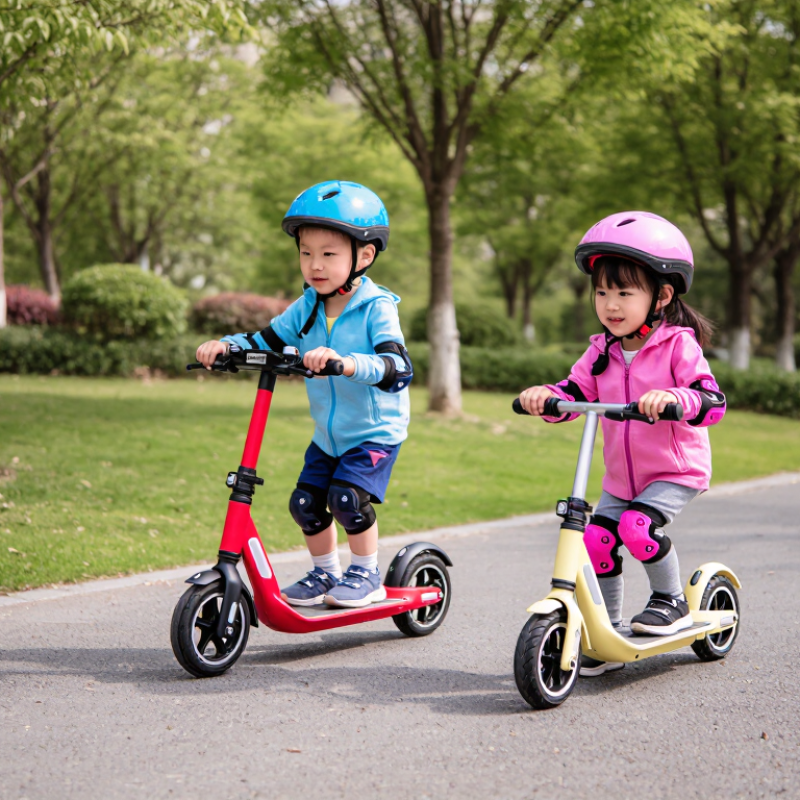
Kids’ electric scooters are not one uniform product. The main types differ by riding position, wheel layout, and control style. Stand-up models have a narrow deck, handlebars, and often a thumb throttle. They are compact, but a child must balance while starting, turning, and stopping. Some models require a push before the motor engages; others move with throttle input alone. Check which system is fitted.
Three-wheel designs add a wheel at the front or rear, creating a wider-feeling platform at low speeds. They can suit riders still learning balance, though extra stability does not replace supervision. Seated scooters support a more relaxed posture and may feel easier over longer rides. Their size and weight can make storage harder. Categories overlap. A three-wheel scooter may also be seated or foldable.
Fit matters more than appearance. Look for a deck the child can stand on comfortably, reachable brake controls, and a speed setting appropriate to their experience. The U.S. Consumer Product Safety Commission’s 2023 micromobility report estimated 56,847 e-scooter injuries treated in U.S. emergency departments during 2022. That figure covers riders of all ages, not children alone. It is a useful safety signal, but not a measure of risk for any single scooter type. Small details matter. A child’s reach can change how confidently they brake.
| Scooter Type | Typical Design | Best Suited For | Key Buying Checks | Potential Limitations |
|---|---|---|---|---|
| Three-Wheel Electric Scooter | Two wheels at the front or rear provide a wider base; some models use lean-to-steer handling. | Beginners who benefit from extra stability and a less demanding balance setup. | Check the maker’s age, height, and weight guidance; look for a stable deck, easy-to-reach controls, and a speed setting suitable for a new rider. | Usually bulkier to carry and store; turning and riding feel different from a conventional two-wheel scooter. |
| Kick-to-Start Two-Wheel Scooter | The rider pushes off before the motor engages; most have a standing deck and two wheels. | Riders comfortable with balancing on a regular kick scooter who are ready to learn powered riding. | Confirm how the motor starts, how the throttle responds, and whether the brake can be operated confidently by the rider. | Requires balance and coordination; the rider must understand how to slow down and stop before using the motor. |
| Low-Speed Beginner Scooter | A child-focused standing scooter designed around a restrained top speed and straightforward controls. | First-time riders using the scooter in a suitable, supervised area. | Compare the stated maximum speed, available speed modes, braking system, deck grip, and the manufacturer’s rider limits. | May have limited hill-climbing ability or range; actual performance varies with rider weight, terrain, battery condition, and temperature. |
| Higher-Power Two-Wheel Scooter | A standing scooter with a more powerful motor or higher available speed than entry-level models. | More experienced, appropriately sized riders, where local rules and the maker’s guidance allow its use. | Prioritize predictable braking, controllable acceleration, suitable speed settings, a correctly sized frame, and the rider’s ability to handle the weight. | Greater speed and mass can increase stopping distance and the consequences of a fall; it is not automatically appropriate for a child just because the scooter fits. |
| Seated Electric Scooter | Includes a seat or a seat attachment; layouts and riding positions differ by model. | Riders who prefer sitting and can safely reach the controls and brakes in the intended riding position. | Check seat stability, rider fit, foot placement, braking access, overall weight, and whether the seat is approved for that scooter. | Can be heavier and less compact; a seat does not remove the need for balance, supervision, or protective equipment. |
| Rough-Surface or All-Terrain Style | Often features larger or wider tires and a sturdier-looking frame than a small-wheel commuter style. | Suitable private paths or firm, even surfaces when the model’s instructions permit that use. | Read the manual for approved surfaces; inspect tire type, braking, ground clearance, and maintenance requirements. | “All-terrain” does not mean safe on every trail, loose gravel, wet ground, or steep slopes; larger components can add weight. |
| Foldable Commuter-Style Scooter | A standing two-wheel scooter with a folding mechanism for storage or carrying. | Families who need compact storage, provided the scooter is designed and permitted for the child’s use. | Check the manufacturer’s rider limits, folding-lock security, folded weight, handlebar fit, and local rules for where it may be ridden. | Folding hardware adds a component that must be checked regularly; a compact design is not necessarily lightweight or child-sized. |
Buying note: There is no universal age or speed that makes an electric scooter suitable for every child. Follow the specific product manual and local regulations, choose a model the child can control comfortably, and use a properly fitted helmet and other appropriate protective gear. Range, speed, and braking performance depend on the model and riding conditions.