Choosing a Kid Electric Scooter for a child is not simply a matter of speed, color, or price. It is a practical safety decision involving age, body size, riding habits, terrain, and adult supervision. Global buyers also face different product standards, charging systems, weather conditions, and after-sales expectations.
“Parents should buy for control and confidence, not maximum speed,” says Daniel Reed, a child-mobility product safety consultant. His advice sounds simple. It is easy to forget.
A suitable scooter should match the child’s balance and hand strength. A heavy frame may feel stable, yet become difficult to carry upstairs. A narrow deck may look neat, but leave little room for growing feet. Check the handlebar height carefully. Your child should stand comfortably, with relaxed shoulders and a firm grip.
The ten buying tips in this guide examine motor output, speed limits, braking systems, battery range, tire design, frame quality, folding mechanisms, protective equipment, warranty support, and replacement parts. Small details matter. A visible battery indicator can prevent an unexpected stop halfway home. Reliable brakes matter more than decorative lighting.
Some recommendations may challenge common buying habits. The cheapest option is not always economical. The longest advertised range may shrink on hills, cold mornings, or heavier loads. Product descriptions can also sound more precise than real-life riding.
Use this guide as a careful starting point, not a final answer. Inspect the scooter personally. Read the manual. Ask whether your child is genuinely ready. Confidence grows slowly, and that is perfectly acceptable.
A child’s age is only one part of the buying decision. Height, weight, balance, and road awareness matter just as much. A seven-year-old beginner may need a different scooter from a smaller child of the same age.
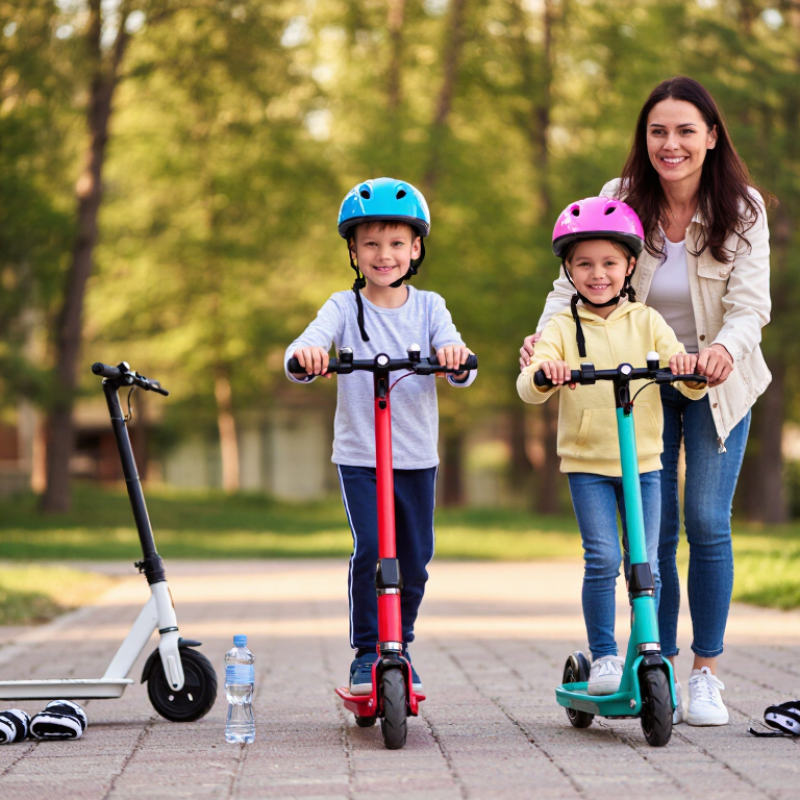
Measure the child while wearing normal shoes. The handlebar should reach around the waist or lower ribs, without forcing raised shoulders. Both feet should fit comfortably on the deck. Check the manufacturer’s weight range carefully, including clothing and a small backpack. A scooter that is too large can feel unstable. Too small may restrict control.
Riding experience should guide the speed and power choice. Beginners usually benefit from gentle acceleration, simple controls, and a lower maximum speed. An experienced child may handle stronger performance, but only in a controlled area with adult supervision. I have seen confident riders lose control when surfaces changed from pavement to gravel. Confidence is not always skill.
Ask the child to practice braking, turning, and stopping before regular rides. Protective equipment should fit correctly, especially the helmet. I once focused too much on motor power and overlooked brake reach; that was a poor decision. A child must be able to squeeze the brake comfortably. Recheck fit as the child grows, because a suitable scooter this season may become awkward next year.
When buying a child’s electric scooter, compare speed before motor power. Local rules differ, but lower speed is usually easier to control. The U.S. Consumer Product Safety Commission reported 233,870 emergency-department-treated e-scooter injuries from 2017 to 2021. That figure supports cautious speed selection, especially for younger riders. A 100–200-watt motor may suit flat paths, while heavier riders or mild slopes need more torque. Do not assume higher wattage means better safety. It can create sharper acceleration and harder braking.
Range claims often use ideal conditions. The U.S. Department of Energy notes that temperature, rider weight, terrain, and speed can significantly affect battery performance. A scooter advertised for 15 miles may deliver much less on hills or cold mornings. Test the stated range against the child’s real route. Leave a practical reserve. It prevents stressful walks home. Weight capacity also deserves careful checking. A rider near the maximum limit may experience slower acceleration, reduced range, and weaker hill performance. I would avoid buying at the limit, even when the specification appears acceptable. The European Committee for Standardization’s EN 17128 framework emphasizes safety requirements for personal light electric vehicles, but compliance does not replace supervision or protective equipment. Check the technical label, charging instructions, brake response, and actual riding environment before purchase.
When buying a kid electric scooter, safety details deserve more attention than color or advertised speed. Check whether the scooter has a dependable brake system, speed control, a gentle start function, and a throttle that small hands can release easily. Lights and reflectors improve visibility near driveways and parks. Rounded edges matter too. Look closely.
Build quality often appears in small parts. Inspect the stem, folding joint, deck, wheels, and handlebar grips for movement or sharp finishing edges. A rigid stem should not wobble under moderate pressure. The deck needs enough grip for wet shoes, although no surface stays perfectly safe in heavy rain. Check the scooter’s weight limit and recommended rider height, not only the age label. A powerful motor can feel impressive, but excessive speed may reduce a child’s control.
Global buyers should request clear certification documents before ordering. Requirements vary by destination, so confirm the applicable electrical, battery, charger, and child-product rules with local authorities or an experienced importer. Marks such as CE or UKCA may be relevant in certain markets, but a printed logo is not proof of testing. Ask for the declaration of conformity, test reports, battery specifications, and charger safety information. Verify that the documents match the exact model and production version. In my experience, vague paperwork is a warning sign. It is easy to trust a sales page too quickly. Also check the manual for charging instructions, storage limits, and inspection intervals. One overlooked connector can become a serious problem.
| No. | Buying Dimension | What to Check | Practical Assessment or Benchmark | Why It Matters | Documents or Evidence to Request |
|---|---|---|---|---|---|
| 1 | Age, height, and rider-weight suitability | Compare the child’s age, height, footwear, and weight with the product’s stated operating limits. Do not rely on age alone. | Choose a model whose maximum rider weight is comfortably above the child’s current weight, while following the manufacturer’s minimum-age guidance. | A correct fit improves balance, braking control, and the ability to reach the handlebar safely. | Instruction manual, technical specification sheet, and clearly printed maximum rider weight. |
| 2 | Speed control | Look for selectable speed modes, a gradual acceleration curve, and a top-speed limit appropriate for the child’s experience and riding area. | A beginner mode with a lower speed setting is preferable to immediate access to the maximum speed. | Lower and predictable speed gives young riders more time to steer, brake, and react to obstacles. | Test report or product specification showing speed modes, maximum speed, and throttle behavior. |
| 3 | Braking system | Check whether the scooter has a reliable hand brake, electronic braking, or a combined braking system. Inspect lever reach and stopping response. | The brake should engage smoothly without excessive lever force, cable looseness, or sudden wheel lock-up. | Effective braking is essential when the rider encounters pedestrians, slopes, loose surfaces, or unexpected obstacles. | Brake test results, maintenance instructions, and information about brake adjustment or replacement parts. |
| 4 | Battery and charger safety | Check for overcharge, over-discharge, overcurrent, short-circuit, and thermal protection. Use only the supplied or approved charger. | The charger should show input and output ratings, polarity, model compatibility, and applicable electrical markings. | Lithium-ion batteries can create fire or shock hazards if poorly designed, damaged, incorrectly charged, or exposed to unsuitable conditions. | Battery specification, charger label, safety test reports, transport test evidence such as UN 38.3 where applicable, and charging instructions. |
| 5 | Frame and folding mechanism | Inspect welds, deck rigidity, steering-column alignment, locking pins, hinges, and pinch-point protection. | The locking mechanism should fully engage, show no noticeable play, and remain secure during repeated folding and unfolding. | Structural looseness or an accidental fold can cause loss of control and serious injury. | Load testing, fatigue testing, assembly instructions, and spare-part availability for locks, bolts, and hinges. |
| 6 | Wheels, deck, and traction | Check wheel diameter, tire material, tread, deck grip, ground clearance, and suitability for the intended surface. | A wide, non-slip deck and tires with dependable grip are preferable; avoid using small solid wheels on rough or wet terrain unless approved. | Stable contact with the ground reduces slipping, vibration, and loss of balance. | Wheel and tire specifications, deck-load rating, surface-use limitations, and replacement-part information. |
| 7 | Visibility and protective equipment | Look for reflectors, visible lighting where legally required, a working bell or warning device, and a helmet that fits correctly. | The child should wear a properly fitted bicycle-style helmet and suitable protective equipment; lighting requirements vary by location. | Visibility helps other road users notice the rider, while protective equipment reduces injury severity during falls. | Lighting specifications, reflector details, user instructions, and local rules for helmets and public-road use. |
| 8 | Water and environmental limits | Review the stated IP rating, temperature limits, storage conditions, and warnings about puddles, rain, charging, and washing. | An IP rating describes tested resistance to water or solids; it does not automatically mean the scooter is waterproof or safe to ride in heavy rain. | Moisture can damage electrical components, reduce braking performance, and increase shock or battery risks. | IP test report, environmental-use instructions, charging warnings, and warranty exclusions related to water damage. |
| 9 | Required regional compliance | Verify compliance for the destination market rather than accepting a generic “certified” claim. Confirm whether the product is classified as a toy, personal mobility device, or another product category. | Depending on the market and classification, documentation may involve applicable electrical, battery, EMC, chemical, toy, or mobility-vehicle requirements. | Certification and conformity obligations differ by country, product design, speed, intended age, and whether public-road use is allowed. | Examples to verify with the importer or regulator: U.S. CPSC requirements; applicable EU CE conformity documentation; UKCA or CE requirements for Great Britain; and applicable Australian or New Zealand electrical and product rules. |
| 10 | After-sales support and recalls | Check warranty length, service location, firmware or safety updates, spare batteries, tires, brakes, chargers, and recall-alert procedures. | Prefer suppliers that provide a traceable model or serial number, accessible user manual, parts list, and a clear process for reporting defects. | Long-term safety depends on correct maintenance, available replacement parts, and prompt action when a defect is identified. | Warranty terms, service contacts, recall database checks, repair instructions, spare-part lead times, and disposal guidance for batteries. |
Global buyer note: Certification names and legal requirements can change by country and product classification. Before importing or selling, confirm the current rules with the destination-market regulator, an authorized conformity-assessment body, or a qualified product-compliance professional.
Battery verification should come before color, speed, or folding design. Ask for the battery voltage, capacity, chemistry, and test documentation. A clear label should match the seller’s specification and the charger information. Avoid listings that only say “long-lasting battery.” That phrase proves very little.
Check whether the battery meets recognized transport and electrical safety requirements in your destination market. Requirements can differ between countries and regions. A qualified seller should provide readable certificates, not cropped screenshots. Also inspect the charger’s input range, output voltage, plug type, and frequency rating. The wrong charger may overheat the battery or damage the charging port. Do not guess.
Charging conditions matter at home. Confirm that the plug fits local sockets, or use a properly certified adapter. Never charge beside curtains, on a bed, or without adult supervision. The manual should explain charging time, storage temperature, and what to do after water exposure. Some details are easy to overlook. I would also check replacement-battery availability before purchase. A scooter may work perfectly, yet become impractical when its battery loses capacity. Local repair support, warranty terms, language options, and disposal guidance deserve equal attention. A product that fits the child but not the local infrastructure is not truly compatible.
When buying a kid electric scooter internationally, read the warranty before comparing colors or speed. Check its duration, covered components, and repair procedure. A useful warranty should clearly mention the battery, charger, motor, controller, frame, and brakes. Some policies exclude water damage, normal tire wear, or improper charging. Ask for the exclusions in writing. Small details matter.
Confirm that spare parts are available in your country. Request prices and delivery times for tires, brake pads, chargers, and folding mechanisms. A scooter may look affordable until one missing charger stops daily use. I once overlooked replacement brake pads, and the repair took longer than expected. My checklist was incomplete.
Shipping needs equal attention. Ask whether the package includes assembly tools, tracking, and protective packing. Inspect the carton for crushed corners before signing for delivery. Clarify who handles damaged shipments and return freight. Import duties may also affect the final cost. After-sales support should offer clear replies, troubleshooting videos, and a reachable service email. Test that support before ordering. Send three practical questions and measure the response. A fast answer is helpful, but a precise answer is better. Keep invoices, serial numbers, photos, and chat records. They can shorten a warranty claim. Some sellers promise support, yet provide no local repair option. That weakness deserves careful thought.
Practical buyer checklist priorities: warranty, spare parts, shipping, and after-sales support
Use this five-point screening framework when comparing children’s electric scooters internationally. Safety, age and weight suitability, battery information, and spare-parts availability should be verified before purchase, while warranty coverage, delivery conditions, and after-sales response help reduce ownership risk.