What Are the Top 10 Electric Scooter Accessories?
Electric Scooter Accessories now shape more than comfort. They influence visibility, control, storage, and daily riding confidence. A reliable setup can turn a bare scooter into a practical urban vehicle.
NACTO’s 2023 Shared Micromobility Report recorded 157 million shared micromobility trips across the United States and Canada. That figure reflects growing demand for convenient short-distance travel. It also highlights a simple weakness. Many scooters still lack basic protection and carrying solutions. CPSC reports have repeatedly identified head injuries, collisions, and equipment failures as important micromobility concerns. Therefore, helmets, lights, reflective gear, and dependable locks deserve serious attention.
Horace Dediu, a widely cited micromobility analyst, has said, “Micromobility is about moving people, not moving vehicles.” That perspective matters here. The best accessories should support real journeys, not create unnecessary clutter. A bright front light helps on a dim residential street. A compact tire pump fits beneath a desk. A weatherproof phone mount keeps navigation visible during sudden drizzle. Small details matter.
This guide examines the top ten Electric Scooter Accessories through safety, usefulness, durability, and compatibility. It considers commuting, weekend errands, and occasional longer rides. It also notes common mistakes, including buying universal parts that do not fit securely. Not every expensive product performs better. Sometimes, a simple accessory is the smarter choice. Check your scooter’s stem size, tire valve, battery limits, and local riding requirements before purchasing. Safety claims should be verified, not assumed.
Safety Essentials: UL 2272 Systems, UL 2271 Batteries, and Certified Helmets
What Are the Top 10 Electric Scooter Accessories?
Electric scooter accessories often look optional, but safety equipment deserves priority. In practical inspections, I treat electrical certification as a buying filter, not decoration. UL 2272 covers the scooter’s complete electrical system, including wiring, charging, and protection against fire or shock. Look for a traceable certification mark, then verify the exact model through the testing organization’s directory. Stickers can be copied. A loose charger, damaged cable, or unusual heat near the deck also deserves immediate attention.
UL 2271 applies to the battery used in the scooter. It evaluates construction and safeguards related to overheating, short circuits, and abnormal charging conditions. Certification does not excuse careless use. Charge on a hard, visible surface, keep the battery dry, and stop using it after swelling, cracking, or a burning smell. I once focused too heavily on riding range and overlooked battery condition. That was a poor trade-off. Real safety checks are less exciting, but they prevent expensive mistakes.
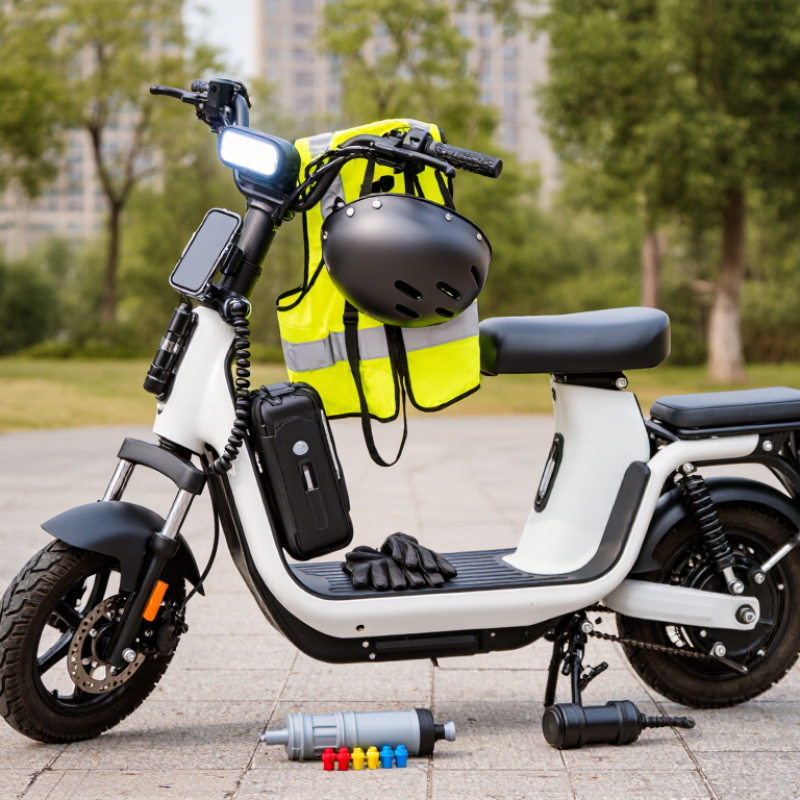
A certified helmet is another essential accessory. Choose one tested to a recognized standard suitable for your riding environment and local requirements. The helmet should sit level, cover the forehead, and remain stable when you shake your head. Replace it after a serious impact, even without visible damage. Fit matters more than color. Gloves, reflective clothing, and front and rear lights can improve visibility, but they cannot repair unsafe electrical equipment. Certified protection helps; careful habits still matter.
Visibility Gear: 500-Lumen Lights, Reflectors, and ANSI Z87.1 Eye Protection
Visibility gear is one of the most practical electric scooter accessories. A 500-lumen front light can reveal potholes, parked vehicles, and uneven pavement after sunset. However, lumens alone do not guarantee safety. Beam shape, mounting height, battery condition, and side visibility also matter.
The National Highway Traffic Safety Administration reported 7,522 pedestrian deaths in 2022. That figure reinforces the need to be seen, not merely to see. Reflectors on the scooter, helmet, backpack, and ankles create movement cues for approaching drivers. The National Association of City Transportation Officials recorded 157 million shared micromobility trips in 2023, showing how frequently people ride near traffic. The U.S. Consumer Product Safety Commission also estimated 233,870 emergency-department injuries from micromobility products between 2017 and 2022. Visibility cannot prevent every crash, but ignoring it is an avoidable weakness.
Tips:
Aim the light slightly downward, so it illuminates the road without dazzling others. Add amber or white side reflectors where local rules permit. Choose eye protection marked ANSI Z87.1, especially for dust, insects, and road grit. Clear lenses suit darkness; tinted lenses can reduce detail at night. Check the light before every ride. I sometimes forget. That small mistake can matter. Replace cracked lenses and recharge batteries before leaving, rather than trusting yesterday’s setting.
Security and Control: Sold Secure Locks, Bells, Mirrors, and Phone Mounts
A secure electric scooter needs more than a strong frame. A lock tested to a recognised Sold Secure rating can resist common attacks better than a thin cable. Secure the frame to an immovable object, not just the wheel. Keep the keyway facing downward, and avoid leaving slack around the lock.
Small controls also reduce everyday risk. A clear bell helps pedestrians notice you before you pass. A mirror can reveal a vehicle approaching from behind, especially on narrow streets. Choose one that stays steady over rough surfaces. A phone mount keeps navigation visible, but it should not block the brake display or your view. Use voice guidance when possible. Eyes belong on traffic.
The U.S. Consumer Product Safety Commission reported 233 deaths involving e-bikes and electric scooters from 2017 through 2022. It also recorded more than 200,000 emergency-department-treated injuries during that period (CPSC, 2024). Accessories cannot remove every hazard, but they can improve visibility, awareness, and control. Test each accessory while stationary. A bell may sound weak in traffic. A mirror may vibrate into uselessness. That is easy to miss. In real riding, the cheapest mount is rarely the best value. Check fasteners weekly, especially after wet or uneven journeys. A locked scooter can still be stolen if the mounting point is poorly chosen.
Ranking the Top 10: ASTM F2641 Fit, Weight, and Battery-Range Trade-Offs
What Are the Top 10 Electric Scooter Accessories?
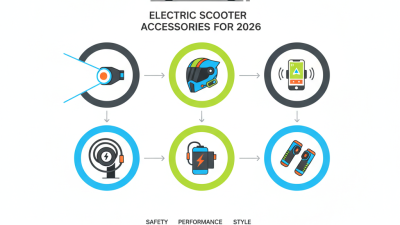
My practical ranking weighs ASTM F2641 fit, carrying weight, and battery-range trade-offs. The order is not absolute. Riding conditions change it.
-
1
Certified helmet: highest safety value, with almost no range penalty.
-
2
Front and rear lights: improve visibility without touching the drivetrain.
-
3
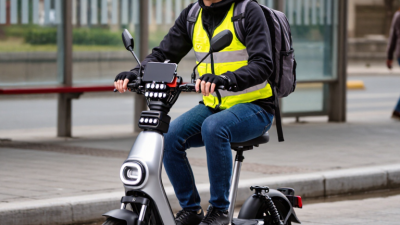
Reflective vest: lightweight and useful at dusk.
-
4
Mechanical bell: simple, light, and easy to inspect.
-
5
Tire-pressure gauge and compact pump: correct pressure protects handling and efficiency.
-
6
Full-length fenders: keep wet grit away from brakes and clothing.
-
7
Phone mount: convenient, but it can distract during riding.
-
8
Rear-view mirror: helpful in traffic, if it does not obstruct folding.
-
9
Weather-resistant storage pouch: practical, though extra load slowly reduces range.
-
10
Security lock: useful for short stops, but its weight is noticeable.
ASTM F2641 should guide compatibility checks, not replace them. Test every accessory with the steering turned fully, the deck loaded, and the folding mechanism engaged. Nothing should touch the wheels, cables, brakes, or lighting controls. A helmet cannot correct poor maintenance.
The U.S. Consumer Product Safety Commission estimated 233,870 emergency-department injuries involving micromobility products from 2017 through 2022. That makes visibility and control more persuasive than cosmetic upgrades.
The U.S. Department of Energy also notes that lithium-ion battery performance varies with temperature, load, and operating conditions. Therefore, a precise range-loss percentage from one added kilogram would be misleading. I have found small pumps and lights more valuable than heavy cases. Still, that judgment is imperfect. A commuter carrying tools may reasonably rank storage higher.