Inquiry
Form loading...

Best Dual Motor Electric Scooter Manufacturer in China?

Choosing the best Dual Motor Electric Scooter manufacturer in China takes more than comparing top speed or motor ratings. Buyers should examine how a supplier designs, tests, and supports complete scooters. A strong product pairs responsive acceleration with dependable braking, stable handling, and a battery system suited to its intended use. Details matter. Ask about frame materials, controller protection, water-resistance testing, and replacement-part availability. These practical checks reveal more than a glossy product photo.

This guide explains how to assess manufacturers using verifiable information, not broad promises. Review factory capabilities, quality-control procedures, sample consistency, and communication before placing an order. Request clear specifications and test records, then confirm that they match the exact model under consideration. A supplier’s experience with export markets can be useful, but it does not guarantee consistent production. Check references where possible. Even a polished brochure leaves questions unanswered. I would still ask how the company handles defects, warranty claims, and changes between sample and bulk production. Those answers may take time to verify, and that is worth acknowledging. The right partner depends on your target riders, order volume, and service expectations. There may be no single best manufacturer for every buyer. With careful comparisons, you can identify a credible Chinese supplier and make a decision grounded in product evidence, transparent communication, and realistic support.
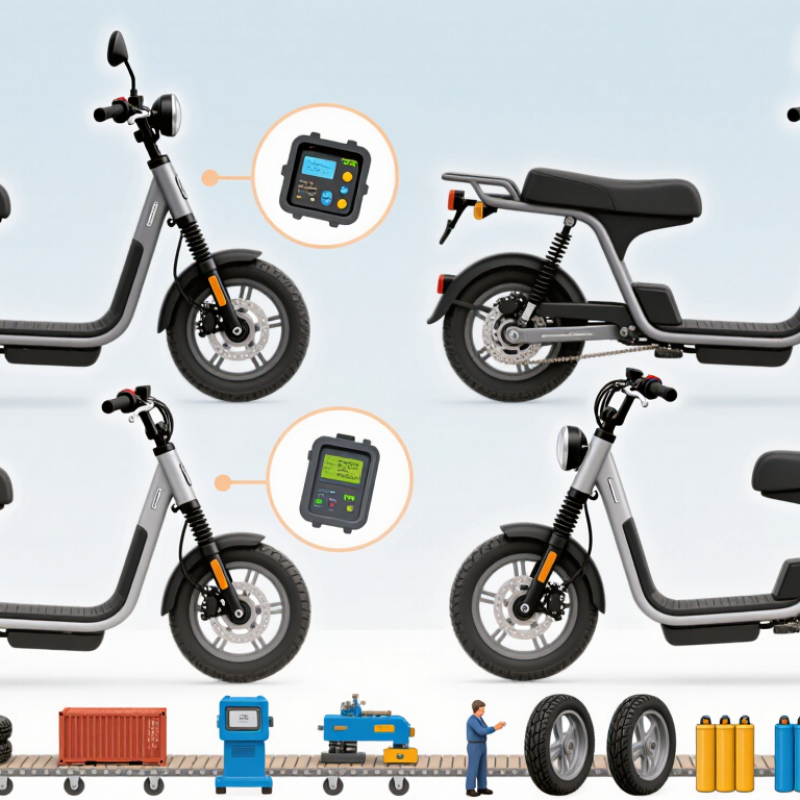
Best Dual Motor Electric Scooter Manufacturer in China?

What Defines a Dual-Motor Scooter? Rated Power, Peak Power, and AWD

A dual-motor scooter uses one motor at each wheel, usually allowing both ends to deliver drive. Rated power describes the output a motor can sustain under stated conditions. Peak power is a brief burst, often available during acceleration or climbing. For example, two 500-watt rated motors may advertise a much higher combined peak figure. That does not mean the scooter can hold peak output uphill for minutes. Heat matters. So does battery voltage. Numbers alone mislead.

When assessing a manufacturer in China, ask how rated and peak power are measured, and whether the figures apply per motor or to the pair. Check for thermal testing, controller limits, and clear specifications. AWD can improve acceleration and traction on loose or wet surfaces, but it does not guarantee shorter stopping distances. Tire grip and braking still matter. On a steep climb, two motors may share the load, yet sustained power can fall as components warm. A useful test includes repeated climbs, not one short sprint. I would also compare the scooter’s real-world range at ordinary riding speeds; power claims rarely explain that trade-off. A tidy spec sheet is not proof of consistent production.
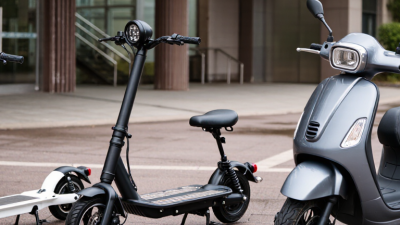
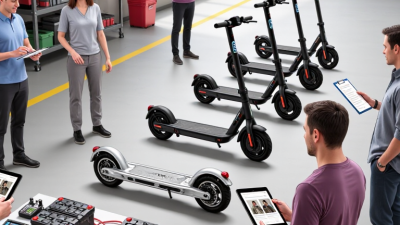
How to Compare Performance: Battery Wh, Motor Output, and Range-Test Conditions

When comparing electric scooters, battery capacity in watt-hours (Wh) gives a more useful starting point than voltage alone. Multiply voltage by amp-hours to estimate stored energy. A 48 V, 15 Ah battery, for example, holds about 720 Wh. That figure does not guarantee a specific distance. Rider weight, hills, tire pressure, and temperature all affect energy use.

Motor output needs careful reading, too. Ask whether the quoted wattage is rated continuous power or peak power. Peak output can help explain brief acceleration, but continuous output better describes sustained climbing. Numbers can look impressive. Check the controller limits and whether both motors can deliver their stated output at the same time. A spec sheet may leave this unclear, and that deserves a follow-up question.

Range claims only make sense when the test conditions are disclosed. Look for rider weight, speed, route gradient, temperature, tire pressure, and assist mode. A flat-road test at steady speed will usually differ from stop-and-go riding on steep streets. Request a written test protocol or measured energy use per kilometer, not just a best-case distance. Small details matter. Even a cool morning can change battery performance. For a fair comparison, use the same route, load, and speed, then record the battery level before and after each run. One test is not enough.

How Chinese Manufacturers Build Scooters: Motors, Controllers, Cells, and Quality Control

A dual-motor electric scooter depends on more than two powerful motors. Chinese manufacturers must match motor output with controller settings, wiring, and the scooter’s intended use. If the controllers deliver too much current, heat can build up around connectors during a long climb. If settings are too cautious, acceleration may feel weak. Small details matter.

Battery quality starts with cell selection and traceability. Manufacturers check cell voltage and internal resistance before assembling a pack, then fit a battery management system to monitor charging and temperature. A neat battery enclosure is not enough; vibration can loosen connections over time. Pack tests should include charging, discharge, and temperature checks. Not every test catches everything.

Quality control also means testing the finished scooter, not just its parts. Workers can inspect welds, fasteners, brakes, displays, and cable routing, then run the scooter under load. Recording test results helps identify patterns across production batches. Still, a checklist cannot imitate every road, rider, or weather condition. That limitation deserves attention. Ask how a maker verifies motor balance and battery consistency, and what happens when a unit fails inspection.

Safety and Compliance: UL 2272 and EN 17128’s 25 km/h PLEV Scope

For a dual-motor scooter, compliance depends on the exact configuration, not the product category alone. EN 17128:2020 addresses personal light electric vehicles designed for speeds up to 25 km/h and continuous rated power up to 1 kW. Check how the standard’s power limit applies to both motors together. UL 2272 assesses electrical systems in personal e-mobility devices, including risks linked to electric shock and fire. It does not, by itself, certify every aspect of a scooter’s braking or riding safety.

The US Consumer Product Safety Commission’s 2023 micromobility report estimated 360,800 emergency-department-treated injuries involving micromobility products from 2017 to 2022. This figure covers several product types, not scooters alone, but it underscores why safety checks matter. For manufacturers, battery protection, wiring quality, charging controls, and braking tests deserve close attention. Paperwork is not the whole story.

Tips: Ask for test reports tied to the exact model, battery, motor ratings, and firmware version. Confirm whether the stated speed is the designed maximum, not merely a setting in a demo unit. Inspect connectors and cable routing for abrasion points. Small details matter. And a supplier’s answer may need checking against the actual certificate scope.

How to Evaluate Manufacturers: Production Capacity, Warranty, Failure Rates, and Support

A strong dual motor electric scooter manufacturer should show more than a large factory floor. Ask for monthly output, current order volume, and recent production records. Check whether motor assembly, battery testing, and final inspection happen under documented procedures. A busy line is not proof of consistent quality. Request a sample inspection report, and compare its dates and batch numbers with the scooters you plan to order.

Warranty terms need clear limits. Confirm coverage periods for motors, controllers, batteries, and frames, plus the process for handling claims. Ask how failure rates are calculated: per unit shipped, per component, or per period in service. Request data from a recent production batch, not just a broad average. Also check spare-part availability and typical response times. Support matters after delivery. A useful test is to send a specific technical question and assess whether the reply includes practical steps, not vague promises. Even a careful review can miss issues; factory records do not replace independent testing.

Tips: Ask for written answers. Review one warranty claim example. Confirm who pays return shipping. Keep the questions specific, and record any promises. No checklist is perfect.

Best Dual Motor Electric Scooter Manufacturer in China? - How to Evaluate Manufacturers: Production Capacity, Warranty, Failure Rates, and Support

Use this framework to compare manufacturers. The targets below are buyer evaluation guidelines, not claims about any specific manufacturer; confirm all figures with current records, samples, and written terms.

Evaluation dimension What to evaluate Evidence to request Suggested weight
Production capacity Verify actual monthly output, available capacity, lead time, peak-season plan, and whether motor, battery, and controller assembly are managed in-house or by suppliers. Recent production records, shift schedule, line-capacity breakdown, order backlog, and an independent or live factory audit. 15%
Quality control Check incoming-part inspection, in-process checks, final functional testing, serial-number traceability, and how defects and corrective actions are recorded. Inspection plans, sample test reports, calibration records, nonconformance logs, and corrective-action examples. 15%
Warranty terms Compare coverage by component, warranty duration, exclusions, claim process, labor and shipping responsibility, and availability of replacement parts. Treat 12 months as a possible purchasing target, not a universal industry rule. Written warranty policy, component-by-component coverage schedule, sample claim procedure, and spare-parts price list. 15%
Failure and return rates Ask for product-specific results over a stated period. Ensure the figures distinguish warranty claims, confirmed product failures, returns, and units shipped; compare like-for-like models and markets. Dated, model-level reports with clear definitions and denominators. A basic calculation is: confirmed failures ÷ units shipped in the same cohort and period. 15%
After-sales support Assess support languages, business-hour coverage, response and resolution targets, diagnostic guidance, escalation route, and access to service documentation. Written service-level terms, support contacts, troubleshooting manuals, parts diagrams, and examples of anonymized case records. 10%
Dual-motor system validation Test both motors and controllers under load. Review thermal behavior, braking performance, wiring protection, water-ingress protection claims, and fault handling in the intended configuration. Test procedures and reports for the exact model and configuration, sample-unit inspection, and documented operating limits. 10%
Battery safety and traceability Confirm battery configuration, cell and pack traceability, protection functions, handling instructions, and documentation applicable to the destination market and shipment. Battery specifications, applicable test reports, safety data, pack inspection records, and UN 38.3 test summary where required for lithium-battery transport. 10%
Market compliance Match compliance documentation to the product configuration and destination. Requirements differ by market; examples include EN 17128 for certain personal light electric vehicles in Europe and UL 2272 for applicable personal e-mobility electrical systems in the United States. Current reports or certificates from a qualified testing body, with model identifiers that match the offered scooter and components. 5%
Commercial reliability Review payment terms, production milestones, change-control process, packaging, shipping documents, and the supplier’s process for communicating delays or specification changes. Draft purchase agreement, approved specification sheet, sample packaging, milestone schedule, and references that can be contacted with permission. 5%
Total evaluation weight 100%

Tip: Score each category consistently, verify claims against the exact model and configuration being purchased, and document any promised targets in the purchase agreement.